NOPA Tightens Supply as Diesel Export Restrictions Could Raise Refiners’ RVO Exposure

US biodiesel had two developments to digest today: a smaller-than-expected NOPA crush and Washington’s discussion of restricting fuel exports. August crush came in at 205.456 million bushels, 6.094 million below the 211.550 million trade estimate, although still up 8.2% year on year. Soybean-oil stocks were 1.201 billion lb, 56 million below expectations and down 4.4% from a year earlier. Crushing fewer beans than expected also means producing less oil: using an illustrative yield of 11.5 lb per bushel, the crush shortfall would represent approximately 70 million lb less oil than anticipated. That could explain the 56-million-lb inventory miss without requiring stronger-than-expected demand. The report points to a smaller feedstock cushion for biodiesel producers, but does not by itself show that biodiesel consumption exceeded expectations.

December soybean oil, the more relevant benchmark for US traders, stood at 70.35¢/lb, up 0.16¢, while December ULSD rose 19.52¢ to $4.7352/gal. Using 7.5 lb of oil per gallon, the December BOHO spread narrowed from 72.42¢ to 54.10¢/gal. That improved the feedstock-versus-diesel calculation by 18.32¢/gal, although soybean oil still cost more than diesel before processing costs and credits. December D4 RINs fell 3.685% to $2.070, reducing conventional biodiesel credit value by approximately 11.9¢/gal at a 1.5 multiplier. After allowing for that decline, the December calculation improved by roughly 6.4¢/gal. Producers gained some breathing room, but the December market shows a more modest improvement than the nearby October spread suggests. Oct/Jan Soyoil bounced a bit today on the NOPA news.

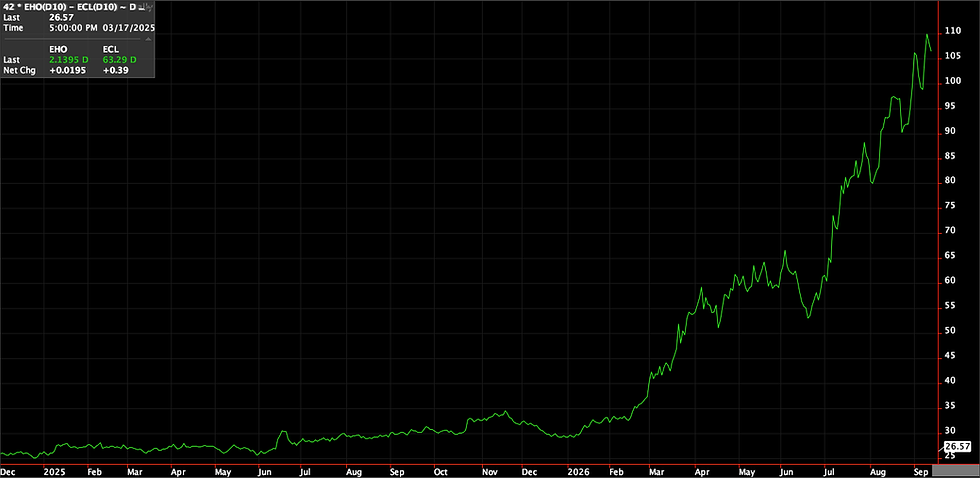
The export debate now belongs in refiners’ RVO calculations, and I would expect strong industry pushback. Senate Majority Leader John Thune’s reported comments concerned diesel, but retaining just one product would leave refiners balancing diesel against continued exports of gasoline and other refinery output. A broader refined-fuel restriction could become part of the discussion. Exported petroleum gasoline and diesel are excluded from Renewable Volume Obligations; redirecting those barrels into obligated domestic supply would increase the exporting refiner’s RIN requirements and potentially raise its compliance bill sharply. Additional buying could also lift RIN prices, although today’s 3.685% D4 decline does not yet show that outcome so industry hasn't quite realized the dire nature of the situation. Refiners could face lower domestic product prices alongside higher compliance costs, giving them reason to reassess margins and RIN coverage starting today. I suspect the discussion would then reach crude exports: refiners would resist retaining products while continuing to buy crude exposed to international demand, and could press for crude-export restrictions to help lower feedstock costs. That would shift pressure upstream to US oil producers. Neither broader restriction has been announced but there is historic precedent, and cheaper crude would not remove the additional RIN requirement. The industry-wide compliance increase would also depend on how much retained fuel displaced imports or prompted lower refinery runs. Diesel Crack is $115/brl and no one has any doubts that we have a serious distillate issue.

Europe’s physical window supplied the day’s most striking outright prices. Reported RME at $1,915.84/tonne, up $54.09, and FAME 0 at $1,877.51, up $35.76. Those levels stood $67.91 and $88.05 respectively above the report’s monthly averages. UCOME crossed $2,000 to reach $2,005.84/tonne, gaining $105.09 in one session and exceeding its monthly average by $112.24. Its premium over FAME 0 reached $128.33, compared with a monthly average of $104.14, so its strength extended beyond the rising gasoil component. HVO Class II was also higher at $3,211.13/tonne, up $34.40. With FAME 0 nearly $90 above its monthly average and UCOME more than $110 above, today’s window made the increase in replacement costs clear.

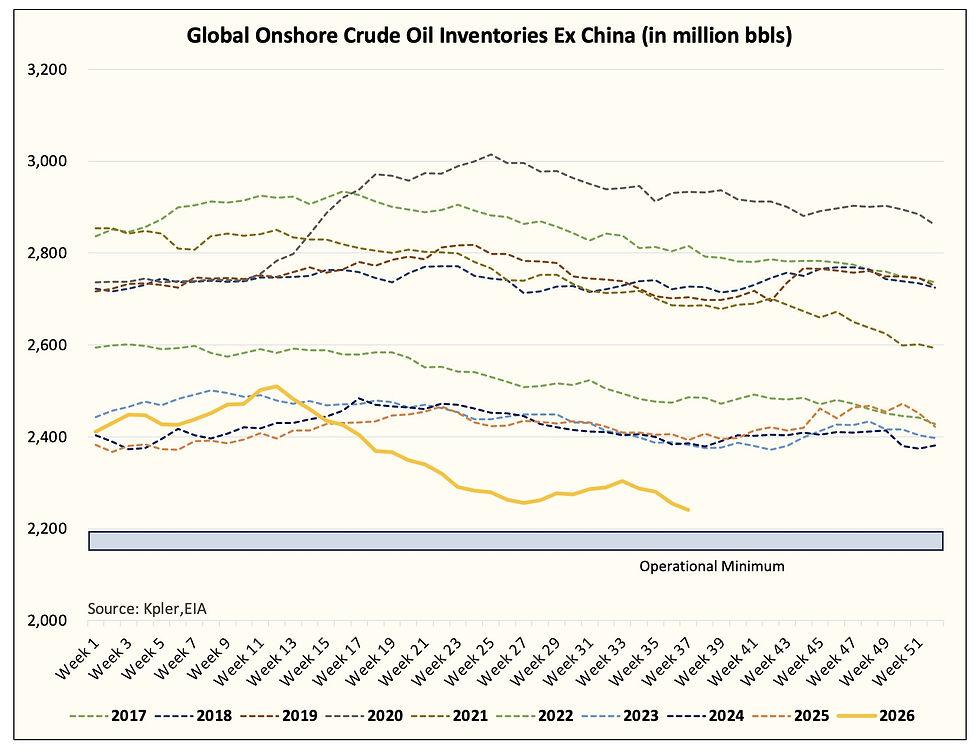
The updated European paper figures show where activity concentrated. Week 36 turnover across the four tracked contracts totalled 633,400 tonnes, down 5.3% from Week 35’s 668,800 tonnes, but UCOME volume jumped 56.5% to 198,500 tonnes, its highest total in the six weeks shown. HVO2 contributed 202,800 tonnes, RME 140,600 and FAME 0 91,500. UCOME’s share rose from 19.0% to 31.3% of the tracked total. Paper turnover is not physical consumption, but that shift gives useful context to today’s $2,005.84 window price. European buyers are paying sharply higher outright prices for renewable fuel. In the US, December biodiesel economics improved by a more restrained 6.4¢/gal after the RIN adjustment, while the inevitable export debate could reshape both refiners’ petroleum margins and their renewable compliance costs. The Global Onshore Crude Oil invetories is scary.


Comments