Bigger Mandates, Longer Deadlines

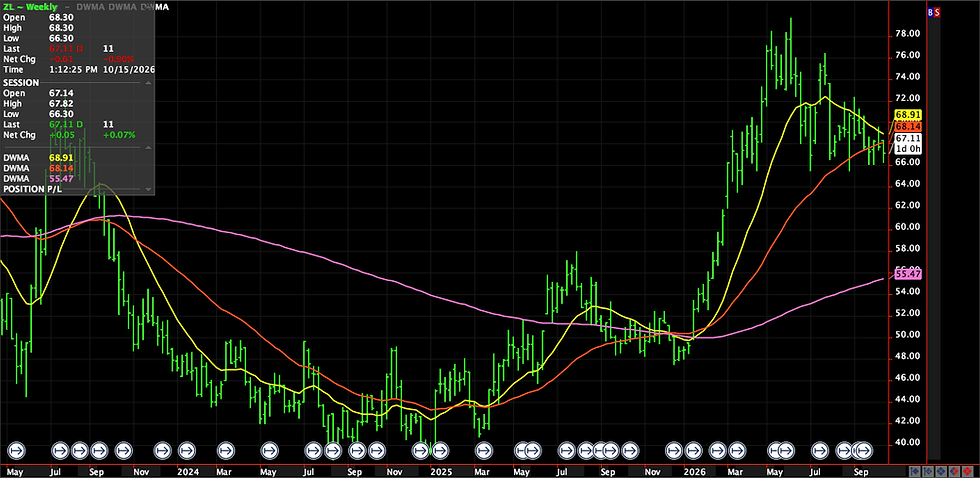
EPA’s proposed restoration of 770 million RINs comes with another potential compliance extension, weakening the immediate demand impact of the announcement. The 2025 reporting deadline of October 1, 2026 put compliance 21 months after the start of the obligation year. Automatic extension provisions and separate discretionary deadline changes increasingly dilute the urgency of annual RVOs. The soybean oil carry we have followed over the past six months has repeatedly challenged expectations of nearby feedstock scarcity. December now trades 0.50¢/lb below March, equivalent to $11.02/mt. Harvest supply and plant operating rates also influence this spread, but nearby oil remaining cheaper than deferred delivery reinforces our view: headline mandates have yet to translate into sufficient immediate feedstock demand.

In NWE, November ICE gasoil reached $1,471.50/mt on the screen, up $20, while November/December backwardation widened 11.7% to $45.50/mt and November/January increased 12.1% to $86. Spot Biodiesel barge activity appeared thin as traders assessed escalation around Saudi Arabia and the Strait of Hormuz. Biofuel paper premiums softened despite stronger diesel: Q1 RME fell $20 to $205/mt over gasoil, Q1 FAME dropped $16 to $129, and November UCOME eased $8 to $257. December HVO Class II lost $60 to $1,310 over gasoil, while Q1 UCOME/FAME widened $12 to $182/mt. The supply backdrop remains difficult. Today’s IEA report puts September Middle Eastern refined-product exports at 1.9 million b/d against 4.7 million before the conflict, approximately 60% lower. Recovering crude loadings therefore offer insufficient evidence of restored diesel availability.
In the US, EPA proposes either adding 385 million RINs to each of 2026 and 2027 or assigning the full 770 million to 2027. Comments close December 4, and the agency identifies a potential extension beyond the existing March 31, 2027 compliance reporting deadline, depending on the rulemaking outcome and timing. The all-2027 approach leaves 2026 percentage standards unchanged, while the equal split raises the proposed biomass-based diesel standard from 5.24% to 5.29%. December D4 nevertheless traded at $2.03/RIN, down 1.27%, while December BOGO narrowed from $88.82 to approximately $53/mt. December board crush remained around $2.63/bushel, approximately $97/mt of soybeans. Strong processing incentives alongside soybean oil carry leave physical consumption needing to absorb continued production. The market response remains consistent with limited immediate compliance pressure so RINs went down.

In Southeast Asia, POGO is deeply negative through January, improving the incentive for PME blending without yet making every delivery month workable. Today’s indications put October at minus $305.99/mt, November at minus $252.89, December at minus $187.36 and January at minus $126.70. Against our working requirement of at least a $250/mt palm discount to gasoil, October and November meet the threshold, while December needs another $62.64/mt of compression and January $123.30. December Malaysian palm oil nevertheless closed MYR4,699/mt, up MYR17, showing diesel drove today’s relative adjustment. Our expectation remains further pressure on deferred POGO as palm supply seeks additional demand. Chinese buying through tenders also makes quiet spot activity an unreliable measure of total crude procurement. For diesel availability, the relevant test remains refinery output and export arrivals.

My bias remains stronger nearby diesel alongside lower BOGO and more negative deferred POGO. The IEA reports September global diesel exports 700,000 b/d below a year earlier and expects replenishment of depleted gasoil inventories beyond normal seasonal movements only from the second half of 2027. Its recovery outlook depends on improving supply, leaving renewed Gulf disruption a direct challenge to those projections. Meanwhile, the contrast between $86/mt November/January gasoil backwardation and $11.02/mt December/March soybean oil carry remains clear: diesel prices immediate scarcity, while feedstock prices show less urgency. The mandate’s eventual obligation survives a reporting extension, but repeated flexibility weakens its immediate purchasing force. Sustained diesel inventory builds would challenge our diesel outlook but I don't see any of that right now. Firmer D4 and narrowing soybean oil carry would challenge our assessment of feedstock demand but with Brazil growing a 186 Mil MT Soybean crop, it is hard to see any lack of feedstock at the moment.


Comments