Diesel Squeeze Intensifies as BOGO Breaks and Structure Signals Immediate Shortage
- Henri Bardon
- 3 minutes ago
- 3 min read

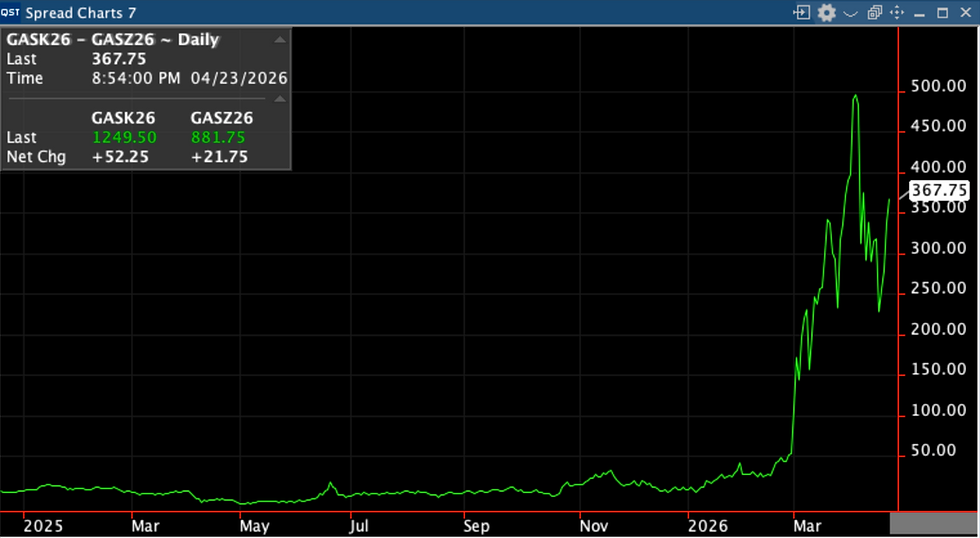
The distillate complex is moving deeper into dislocation with structure driving the signal. ICE gasoil May/Dec is now at +367.75, with front month near $1,250/mt versus Dec around $880/mt. This level of backwardation reflects a physical shortage. The market is paying a steep premium for prompt barrels and that pressure is accelerating and we maybe on our way to test the high again!
Refining margins confirm the severity. The heat crack is now near $72–73/bbl while the 3:2:1 crack is holding around $55–57/bbl. Both sit near cycle highs at the same time. This combination points to a system short middle distillates rather than crude. Asia is cutting refinery runs and shifting to lighter crude slates, which reduces diesel and jet yields. Market pricing suggests an effective shortfall well above 2 million bpd once you factor in reduced runs, lower yields, export restrictions, and logistical disruptions. That deficit is happening in the prompt window.

This dislocation is feeding directly into biofuels. BOGO has dropped to roughly $358/mt, down about $24/mt on the day and more than 35% lower over the last three months. Bean oil remains around 70.9 c/lb or about $1,565/mt, so the move is driven by gasoil strength. Bean oil as a percentage of gasoil has compressed to roughly 1.28x, which confirms diesel is outperforming the feedstock complex.
US biofuels markets are responding to that strength. B100 East Coast is now $6.746/gal, up 18.2 cents on the day, while California renewable diesel is at $3.78/gal, up more than 5.8%. NWE SAF is around $2,522/mt and HVO Class 2 near $3,028/mt. These levels reflect a broad bid across all diesel substitutes. Margins remain supportive, with RD screen margins around $0.31/gal and conventional biodiesel near $0.83/gal. D4 RINs at 1.90 continue to incentivize production and imports that will start showing soon in the data.

Diesel markets are moving higher across all regions. US Gulf Coast ULSD is around $3.84/gal, up more than 6% on the day, with similar gains across New York Harbor and Linden. European ULSD CIF cargoes are near $1,255/mt, up about $15/mt, while ARA barges are around $1,200/mt. Singapore 10ppm gasoil is near $176/bbl equivalent, up over $4/bbl on the day. This is a synchronized global move and confirms the shortage is systemic.
Jet fuel is showing the same stress. US jet is trading above $4.15/gal in New York and $4.70/gal on the West Coast. NWE jet CIF cargoes are around $1,543/mt. Singapore jet has softened slightly on the day to around $181/bbl but remains elevated. Jet is now competing directly with diesel for limited middle distillate output.
Physical biodiesel markets in Europe reflect strong prompt demand. ARA window activity showed UCOME trading between $350 and $370/mt over ICE gasoil, with multiple prints at 355, 360 and 370. FAME traded between 190 and 200, and RME around 260. These premiums remain firm despite higher gasoil, which shows backwardation is pulling barrels into the prompt market.
Flows continue to adjust but do not resolve the issue. Russia increased fuel oil and VGO exports to Saudi Arabia to around 1 million tons in March, up about 18% month on month, allowing the kingdom to burn fuel oil domestically and preserve crude for export. This shifts molecules within the system rather than increasing overall supply and does not alleviate the diesel shortage.
The geopolitical overlay remains critical. Asia depends on the Middle East for roughly 59% of its crude imports, and disruptions through Hormuz are forcing reliance on longer and less efficient routes. Replacement barrels arrive slower and are less suited for maximizing diesel output. The constraint is logistics and refining configuration, not crude availability.

The next two weeks will be difficult in the physical market. Current backwardation is forcing immediate inventory draw while high cracks are pulling every available molecule into the distillate pool. The system cannot adjust quickly enough. Physical markets are already reacting with rising ULSD, firm biodiesel premiums, and elevated jet pricing across regions.
Unless flows normalize quickly or demand weakens significantly, the system will remain under stress into early May. In that environment, prompt diesel and biodiesel stay bid, structure remains extreme, and volatility increases. This is a distillate shortage, and until that changes, biofuels remain structurally supported as part of the diesel pool.


Comments