Advanced FAME Emerges as Asia Prepares for B50
- Henri Bardon
- Nov 6, 2025
- 3 min read

European biodiesel markets ended Thursday steady, but with deeper structural change underway. In the ARAG barge window, RME $1,425/mt, FAME 0 $1,322/mt, and UCOME $1,493/mt left RME gross margins around $145/mt versus rapeseed oil €1,115/mt (× 1.1545). The ICE gasoil Nov/Apr spread held firm above +$73/mt, confirming tight prompt diesel supply amid sanctions and refinery constraints in Northwest Europe.
The market is also watching an emerging divergence within renewable fuels: the SAF/HVO cl 2 spread has widened sharply, with SAF now near $2,900/mt, roughly $470 above HVO. The premium reflects strong airline procurement ahead of 2026 mandates and limited HEFA availability, creating a structural gap that may divert feedstock away from conventional biodiesel streams in Q1.
The week’s biggest structural news came from Argus, confirming the launch of its Advanced FAME 0 barge contract on 17 November, Europe’s first benchmark dedicated to waste-based biodiesel. The move coincides with the ISCC 2025 Impact Report, showing crop-based certifications down 33 percent since 2021 while certified wastes surged 248 percent. Used cooking oil, tallow, and sewage sludge now dominate compliance volumes, cementing Europe’s pivot from crops to advanced residues. Market participants also noted that the German cabinet discussion on RED III has been postponed again, leaving uncertainty over when the final transposition vote will occur and prolonging the policy vacuum for EU producers.
Globally, diesel strength persisted. Asian 10 ppm gasoil cracks topped $26/bbl, and Nov–Dec backwardation widened to +$3/bbl, supported by firm Asian demand and lower U.S. inventories. The stronger distillate backdrop continues to underpin renewable margins despite flat physical biodiesel trades. A very large deal was in the works as trading house Gunvor sought to acquire all of Lukoil’s assets outside Russia, encompassing major refining, storage, and distribution infrastructure that forms a large portion of Europe’s diesel backbone. However, the U.S. Treasury refused to approve the transaction, forcing Gunvor to withdraw its bid. The decision effectively extends the reach of secondary sanctions into the heart of Europe’s downstream logistics, as Lukoil’s remaining assets—still under Russian ownership—now fall under intensified compliance scrutiny. Traders warn this could become highly disruptive to diesel distribution across Central and Southeastern Europe, where Lukoil controls key refineries and terminals. The fallout is not limited to fossil fuels: these same networks also manage HVO and biodiesel blending logistics, meaning any sanction-related bottleneck could reduce renewable-fuel offtake, distort regional demand patterns, and tighten spot blending margins through winter. This episode also underscores a deeper irony in global fuel markets: a U.S. sanctions decision now directly shapes fuel availability and pricing inside the European Union. The inability to clear the Gunvor–Lukoil deal effectively places Washington in the middle of Europe’s internal energy balance, with potential knock-on effects on retail diesel prices, blending operations, and consumer costs across the continent.
Across the Atlantic, the U.S. biofuels lobby intensified pressure on policymakers. The Iowa Soybean Association (ISA) sent a letter to EPA Administrator Lee Zeldin and congressional leaders urging full reallocation of Small Refinery Exemption volumes within the 2026–2027 RVO. ISA President Tom Adam warned that inaction would trigger “RIN demand destruction” and suppress domestic soybean use. The letter emphasized that Iowa’s ten biodiesel plants generate over $120 million in labor income and add roughly 10 percent to the value of each bushel crushed.
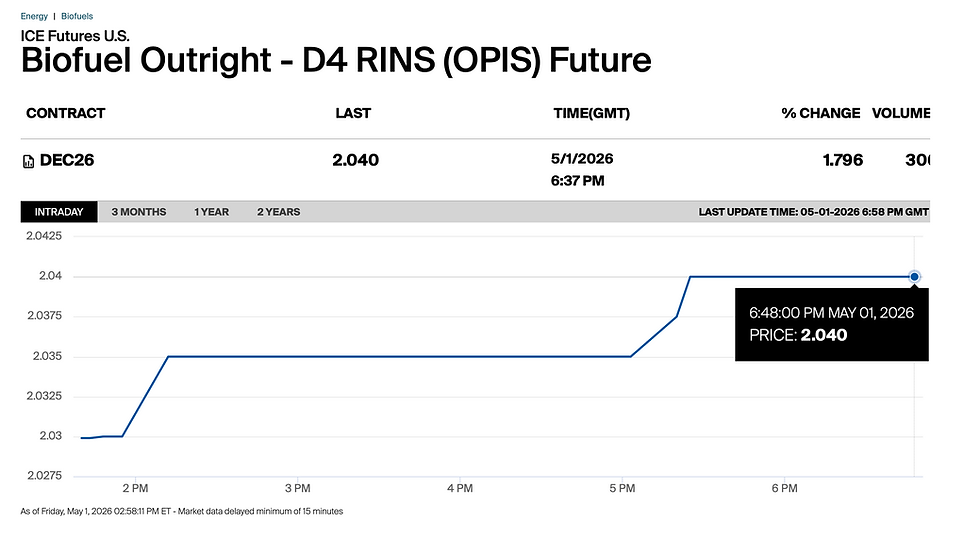
Meanwhile, the U.S.–China soybean talks have turned largely symbolic. Despite diplomatic headlines, China’s 13 percent import tariff remains in place, and state buyers continue to make only token purchases. StoneX Research reports Brazil still undercutting U.S. beans by roughly $1.10/bu delivered, locking in Chinese demand through early 2026. The USDA’s weekly export sheet now lists Bangladesh among top buyers—evidence of a shrinking export footprint. D4 RINs firmed modestly to $1.03, helped by short-covering, but sentiment remains fragile amid policy drift.

In Asia, optimism builds. Wilmar International’s Q3 results showed resilient crushing and stable refined-product sales, while Indonesia’s Energy Ministry confirmed the country remains on track for B50 implementation in 2026, following successful field trials. The program—expected to exceed 20 million kl per year—aims to reduce diesel imports and insulate the domestic market ahead of the EU Deforestation Regulation taking effect on 1 January 2026. With CPO futures around 4,150 ringgit ($992/t) and olein demand firm from India and China, Asia continues to expand both volume and confidence while the West remains bogged down in policy.
The contrasts are stark: Europe refining its benchmarks, America rewriting its letters, and Asia scaling its ambitions. By the time Berlin and Washington reach consensus, the global center of gravity for biodiesel and SAF feedstocks may already have shifted east.


Comments